What if it's ADHD? Autism? Something else?

Sometimes the hardest part isn't finding answers. It's knowing which questions to ask.

What If It's is a place to explore ADHD, autism and neurodivergence, connect the dots between traits and experiences, and better understand the way you or your child moves through the world.

Start wherever you are.

There isn't one path to understanding neurodivergence.
Maybe you've noticed patterns in yourself that you can't quite explain. Your child might experience the world differently from their peers. Perhaps someone has mentioned ADHD, autism or another possibility and now you're wondering what it all means.
You don't need to know exactly what you're looking for.
Start with what you've noticed and follow the connections from there.
Something feels familiar
Explore the traits, experiences and everyday moments that can make people start wondering whether there's something more going on.
I'm looking for answers
Understand different neurotypes, how traits can overlap, what assessment involves and the questions worth asking along the way.
I'm figuring out what works
Understanding your brain is only part of the picture. Explore strategies, supports and ways of working with your brain rather than constantly fighting against it.

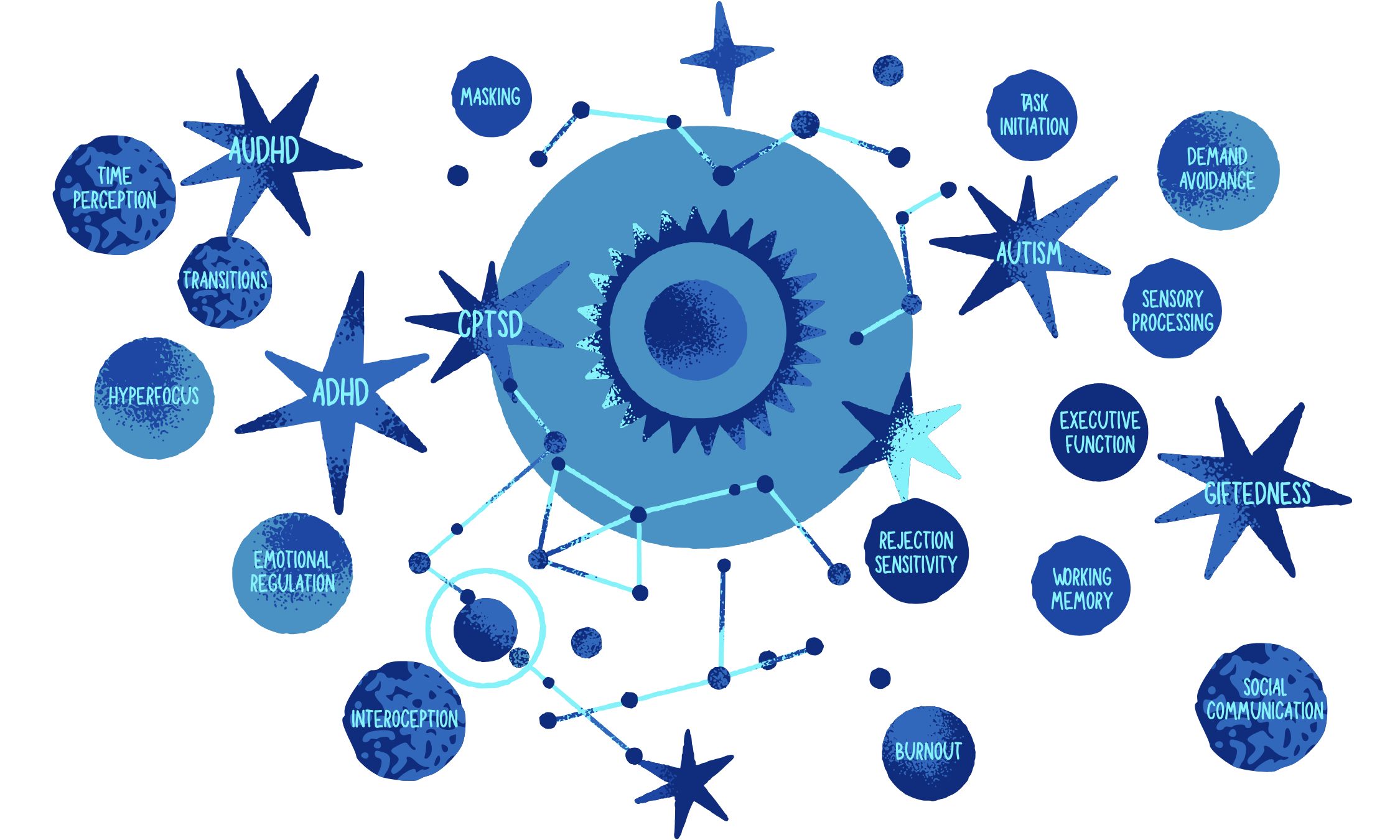
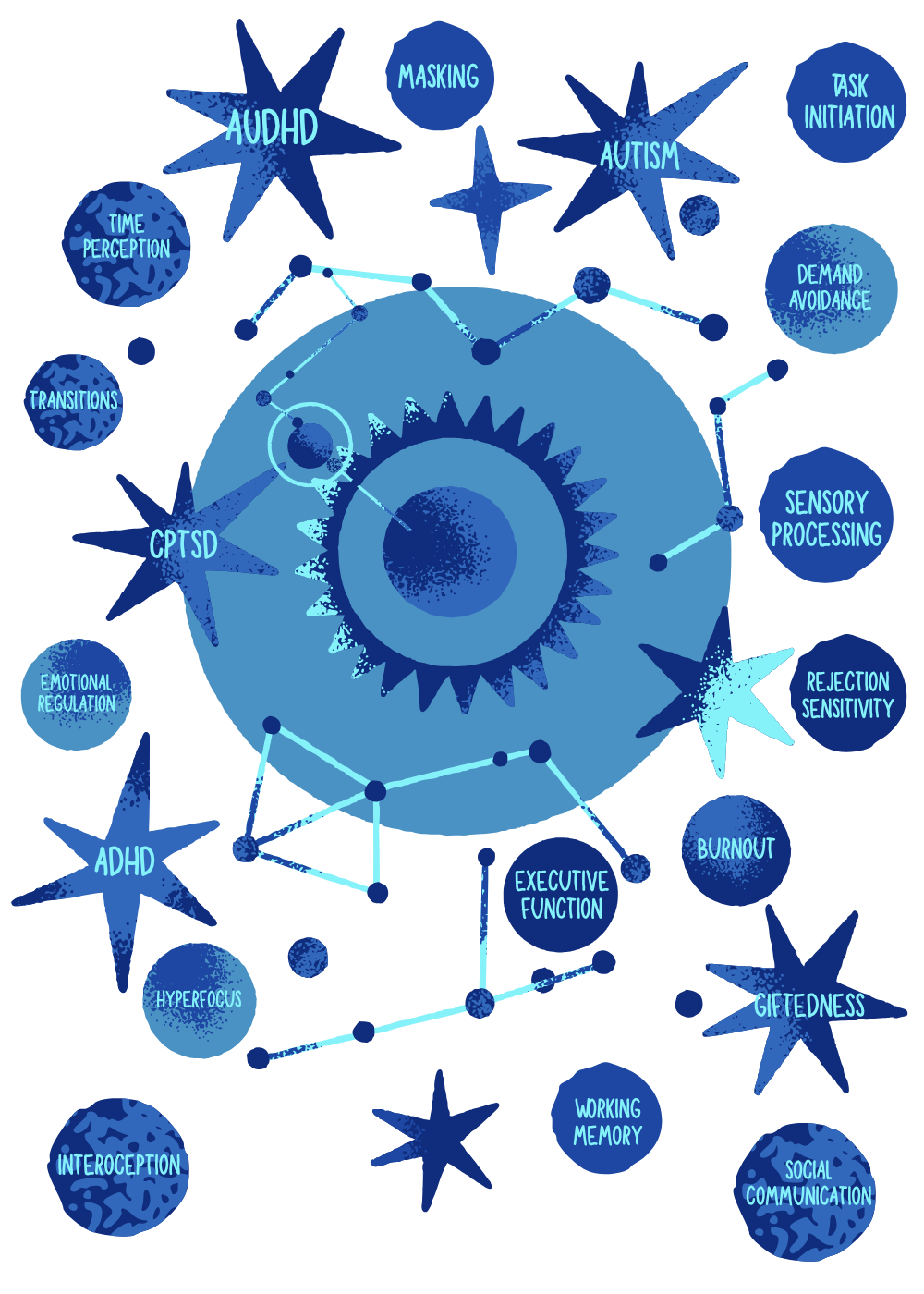
A map of neurodivergence

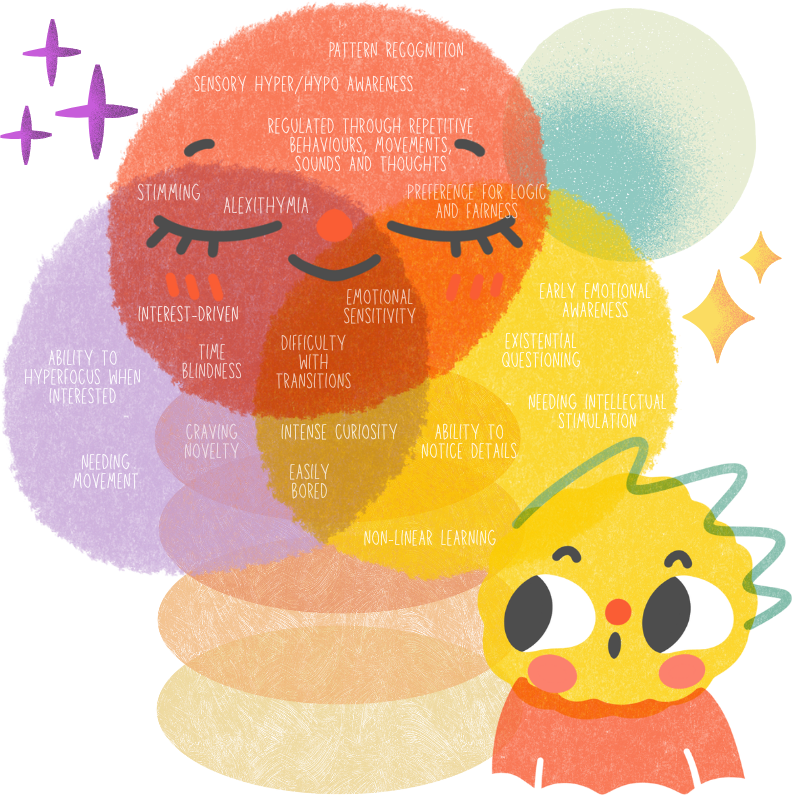
Neurodivergence isn’t a collection of perfectly separate boxes.

ADHD can overlap with autism. Giftedness can mask learning differences. Sensory differences can shape behaviour. Executive function, emotional regulation, masking and burnout can appear across different neurotypes.

Sometimes one dot makes sense on its own. Sometimes it’s only when you step back and look at the pattern that things begin to click.
ADHD

Attention, executive function, impulsivity, motivation, emotions and more. Explore ADHD

Autism

Communication, sensory processing, predictability, interests, masking and different ways of experiencing the world. Explore Autism

AuDHD

When ADHD and autism coexist, sometimes creating needs that seem to pull in opposite directions. Explore AuDHD

Giftedness

Intensity, curiosity, asynchronous development and the complexities of being gifted and neurodivergent. Explore Giftedness

ADHD

Attention, executive function, impulsivity, motivation, emotions and more. Explore ADHD

Autism

Communication, sensory processing, predictability, interests, masking and different ways of experiencing the world. Explore Autism

AuDHD

When ADHD and autism coexist, sometimes creating needs that seem to pull in opposite directions. Explore AuDHD

Giftedness

Intensity, curiosity, asynchronous development and the complexities of being gifted and neurodivergent. Explore Giftedness

Dyslexia

A different way of processing written language, often accompanied by strengths that traditional measures can overlook. Explore Dyslexia

PDA

An intense need for autonomy that can make everyday demands feel much bigger than they appear from the outside. Explore PDA

Sensory Processing

Why sounds, textures, movement, light and other sensory experiences can affect people so differently. Explore Sensory Processing

Dyslexia

A different way of processing written language, often accompanied by strengths that traditional measures can overlook. Explore Dyslexia

PDA

An intense need for autonomy that can make everyday demands feel much bigger than they appear from the outside. Explore PDA

Sensory Processing

Why sounds, textures, movement, light and other sensory experiences can affect people so differently. Explore Sensory Processing

Sometimes the clue is the question.

You don’t always start with “Could I have ADHD?”

Sometimes you start with:

Why can’t I get started, even when I want to?

Why do I procrastinate until everything becomes urgent?

Why is my child fine at school but falls apart at home?

Why do I get overwhelmed by things everyone else seems to manage?

Why do I forget something seconds after thinking about it?

Why do I need routine, but also hate routine?

Why does socialising leave me completely exhausted?

These experiences aren’t answers on their own. They’re dots.

Understanding the patterns around them can help you ask better questions about what’s happening underneath.

Look beyond the behaviour.

What looks like procrastination, defiance or disinterest can have something very different happening underneath.

Understanding the why can change what you do next.

Work with your brain, not against it.

The world isn’t designed for every kind of brain. Understanding how yours works can help you stop fighting against it and find what actually works for you.

Start connecting the dots.

Neurodivergence doesn't always look the way we expect. Traits overlap, some are easy to miss, and there's often more happening beneath the surface.

Get the free Connecting the Dots guide

A visual guide to understanding neurodivergent traits, overlaps and the patterns that might be worth exploring.

Looking for trusted resources?

Finding good information shouldn’t feel like a full-time job.

There are thousands of books, podcasts, websites, videos and tools about ADHD, autism and neurodivergence. Some are life-changing. Others are outdated, misleading or simply not relevant to where you are in your journey.

We’re building a thoughtfully curated library of resources we’ve researched, reviewed and genuinely recommend. Every recommendation includes who it’s for, why it’s worth your time, and where to go next, so you can spend less time searching and more time understanding.

Information that helps you find your bearings.

Evidence-informed

Grounded in research and reliable sources, then translated into language that makes sense outside an academic journal.

Neuro-affirming

Different doesn't automatically mean deficient. We explore challenges honestly while recognising that brains, environments and support needs vary enormously.

Lived experience

Research can tell us what happens. Lived experience can help us understand what it actually feels like.

Curious, not conclusive

One trait doesn't tell you who someone is. We look at patterns, context and possibilities without turning every experience into a label.

More ways to understand.

What If It's is growing into a library of evidence-informed guides exploring how different brains think, learn, feel, communicate and experience everyday life.

Stay curious.

Join us for new guides, research made easier to understand, useful resources and ideas for working with your brain, or better understanding the brain of someone you love.

Over the coming months we'll be adding evidence-informed guides covering:

Neurotypes & profiles

  • ADHD
  • Autism
  • AuDHD
  • Giftedness
  • Dyslexia
  • PDA
  • Sensory Processing

Experiences

  • Executive Function
  • Emotional Regulation
  • Masking
  • Burnout
  • Sensory Needs
  • Friendships & Relationships
  • Parenting
  • School
  • Work

Finding answers

  • Assessment pathways
  • Diagnosis
  • Research explained
  • Books & Podcasts
  • Apps & Tools
  • Practical Guides